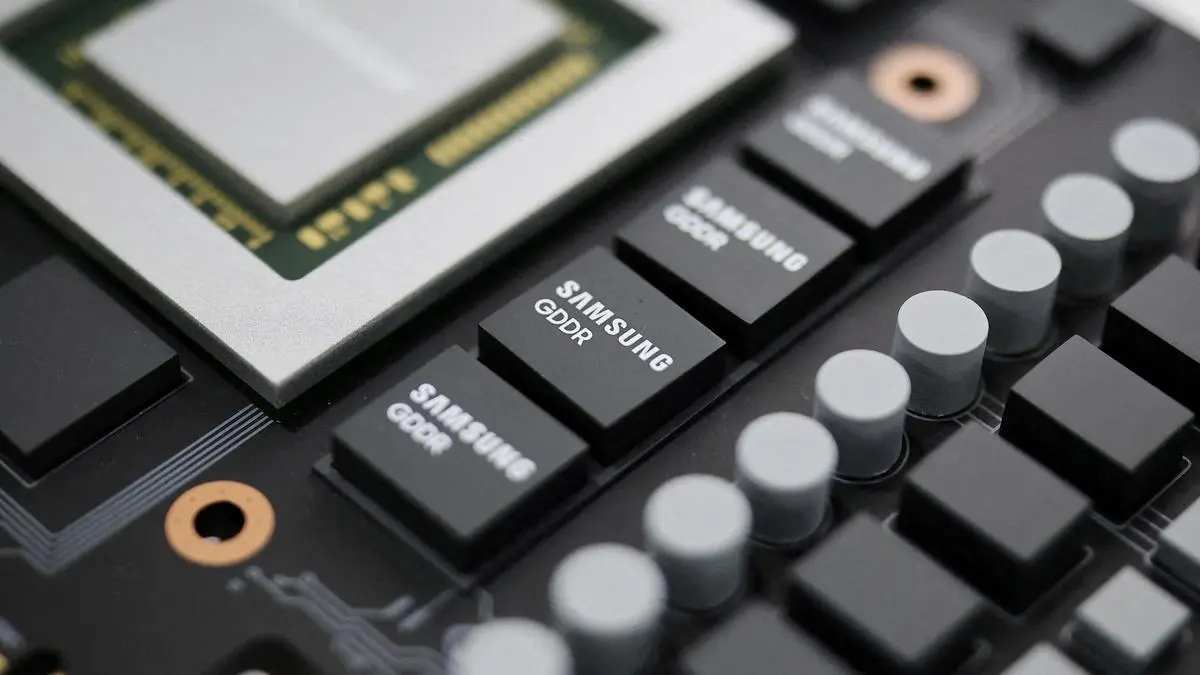
Samsung Electronics’ semiconductor division reported a more than fivefold increase in profit, surpassing market expectations amid strong demand for AI-related memory chips that has tightened global supply. This performance aligns with robust results from industry competitors and increased capital expenditures by major cloud service providers, highlighting the ongoing strength of AI-related investments.
The South Korean company plans to expand sales of AI-specific chips and is on schedule to begin delivering its next-generation high-bandwidth memory (HBM4) to Nvidia in the first quarter. This development is a crucial part of Samsung’s strategy to close the gap with SK Hynix in producing high-margin products essential for AI accelerators. Following the announcement, Samsung’s shares rose by over 1% in after-hours trading.
Samsung’s strong earnings follow better-than-expected results from SK Hynix, indicating that the high demand for AI memory chips is exceeding global supply, benefiting the leading manufacturers. Major technology firms such as Meta Platforms and Microsoft recently reported significant increases in capital spending. Concurrently, this demand surge has led to shortages of conventional DRAM and NAND memory used in devices ranging from personal computers to smartphones. Executives from Samsung and SK Hynix are scheduled to provide market outlooks in separate calls on Thursday morning.
Analyst Greg Roh of Hyundai Motor Securities noted that Samsung’s confidence in HBM4 reflects progress in its efforts to lead the industry’s transition to next-generation high-bandwidth memory later this year.
For the quarter, Samsung reported an operating profit of 16.4 trillion won ($11.4 billion), exceeding analysts’ average forecast of 10.85 trillion won. Net income reached 19.29 trillion won, above the estimated 15.1 trillion won. The company also announced a share buyback program worth 3.57 trillion won and a special dividend, increasing its fourth-quarter dividend payout to 3.75 trillion won.
Samsung’s stock price more than doubled in 2025 and increased approximately 35% in January, reflecting optimism about a strong year ahead as memory chip prices rose faster than anticipated. This growth is attributed to the rapid shift in industry dynamics as hyperscalers invest heavily in AI infrastructure.
Memory manufacturers are reallocating production capacity toward high-bandwidth memory to meet AI data center demands. Since HBM requires roughly three times the wafer capacity of standard DRAM for the same memory volume, this shift has constrained supply for consumer electronics, potentially leading to significant price increases for PC manufacturers and smaller electronics firms.
The competition for leadership in next-generation HBM4 is intensifying, with Samsung nearing certification from Nvidia for its latest AI memory chip, which will be integrated with Nvidia’s upcoming Rubin processors.
Young Jae Lee, senior investment manager at Pictet Asset Management, stated that while SK Hynix currently leads in HBM technology, Samsung is making significant efforts to close the gap. Investors are expected to closely monitor both companies’ perspectives on the memory market outlook.
The AI-driven demand surge is also benefiting Samsung’s foundry business, which competes with Taiwan Semiconductor Manufacturing Co. Samsung reported growth in its contract chipmaking sales for the quarter ending December and anticipates a recovery in the current quarter. The foundry division is increasing production of 2-nanometer products and aims for double-digit revenue growth in 2026.